Developmenet Site


Unexploded Ordnance | Land
Understanding the past. Enabling the future.
Unexploded Ordnance (UXO) can remain concealed beneath the ground for decades, presenting risks to personnel, infrastructure and development activities when disturbed. Historical aerial bombardment, military training, weapons testing, ammunition storage and disposal have left a legacy of potential explosive hazards across the UK and internationally.
These risks are particularly relevant to construction, energy, utilities, infrastructure, mining, extractives, forestry and land redevelopment, where intrusive activities may encounter buried ordnance. Dolomite provides independent UXO risk assessment, management and technical assurance, helping clients understand potential hazards, reduce uncertainty and implement proportionate mitigation.
We operate independently of physical survey and clearance contracting, representing our clients' interests throughout the risk-management process. Our focus is on ensuring that decisions are technically justified, evidence-based and commercially proportionate.
Our Approach
Stage 1 – Preliminary Risk Assessment
Effective UXO risk management begins with establishing whether historical military activities may have introduced explosive ordnance into the ground.
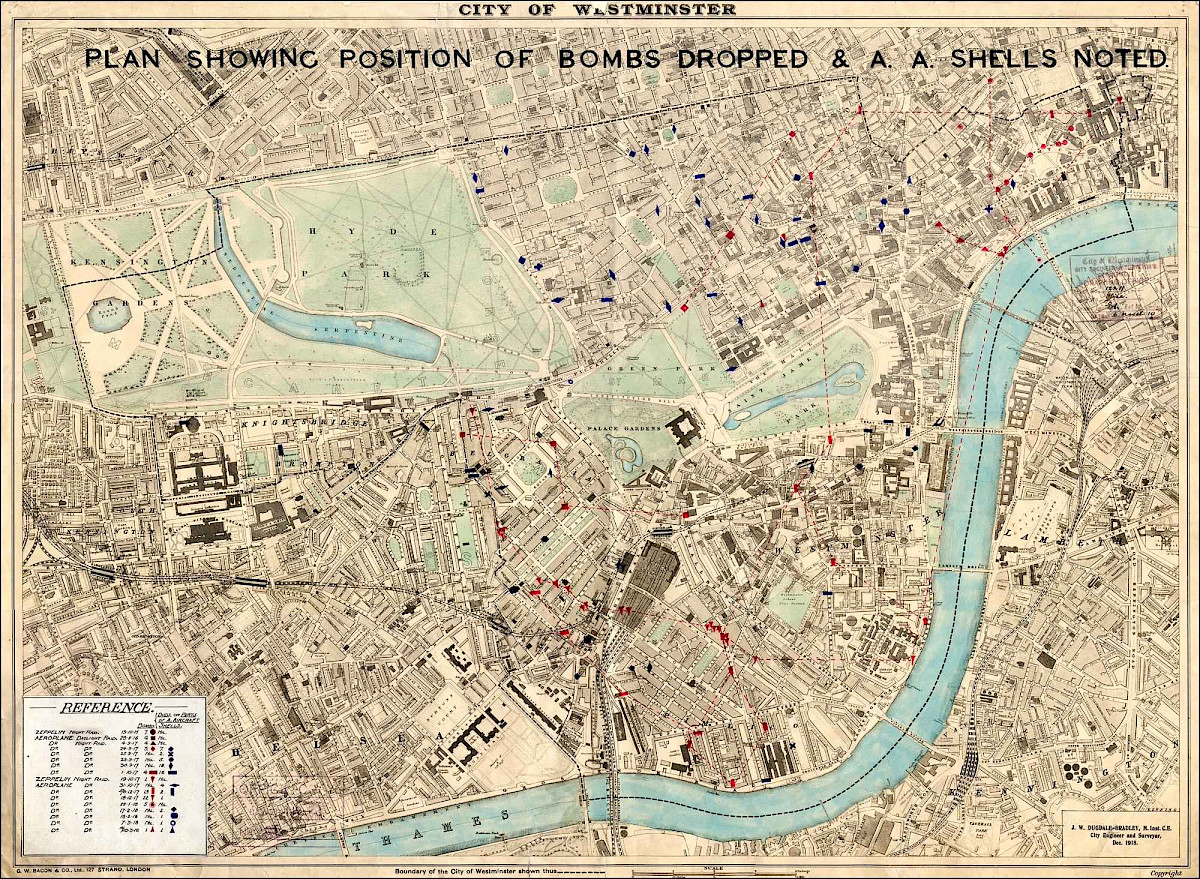
Dolomite uses historical records, bombing data, aerial photography, previous investigations and geospatial intelligence to identify potential hazards.
Our Atlas historical intelligence database brings together available military and geographical evidence, supporting efficient, project-specific screening. The assessment considers site history, potential ordnance sources, previous ground disturbance and proposed activities to determine whether a detailed assessment is necessary.
In line with CIRIA guidance, the majority of sites can be screened out at this stage and progress without further UXO risk management, allowing work and remaining compliant.
Stage 2 – Detailed Risk Assessment
Where the preliminary assessment identifies potential hazards or significant uncertainty, Dolomite undertakes a more detailed evaluation of the available evidence.
This includes further historical research, assessment of potential ordnance types, ground conditions, likely burial characteristics and the potential interaction with proposed works. Where relevant, we also consider how past land use, wartime activity and subsequent development or seabed change may have influenced the presence, condition and location of any remaining ordnance.
We critically assess the quality, completeness and limitations of the available information, distinguishing credible hazards from assumptions and uncertainty. The assessment considers the likelihood and consequences of encountering UXO during specific activities, providing a clear, defensible basis for determining the need for mitigation and ensuring that any measures proposed are proportionate to the risk identified.
Stage 3 – Risk Mitigation Plan
Where the preliminary assessment identifies potential hazards or significant uncertainty, Dolomite undertakes a more detailed evaluation of the available evidence. This includes further historical research, assessment of potential ordnance types, ground conditions, likely burial characteristics and the potential interaction with proposed works.
Our approach is pragmatic, evidence-based and proportionate, focusing on the actual risks associated with the proposed activities rather than the potential presence of UXO alone. We critically assess the quality, completeness and limitations of the available information, distinguishing credible hazards from assumptions and uncertainty.
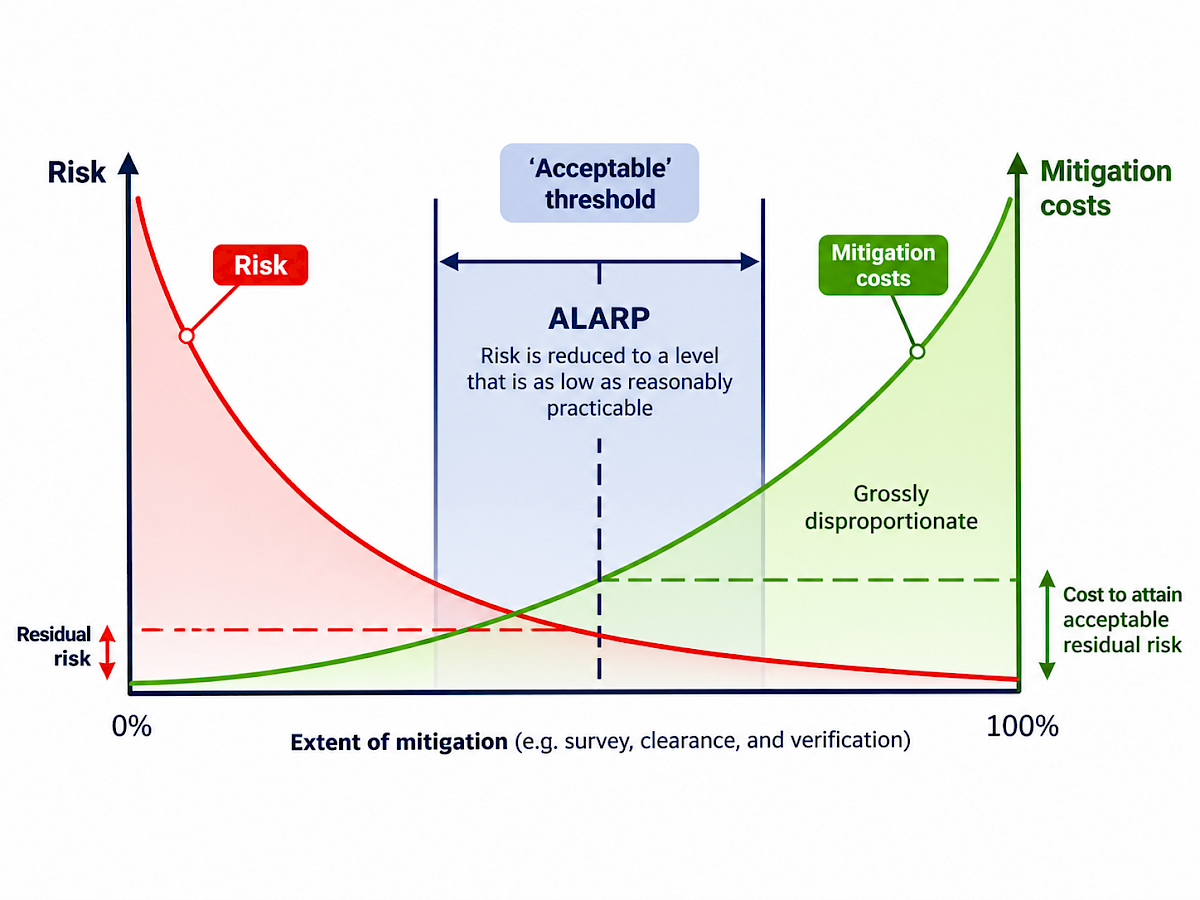
The assessment considers the likelihood and consequences of encountering UXO, alongside opportunities to avoid or reduce risk through project design, construction methodology and targeted mitigation. Our objective is to establish a defensible level of risk and ensure that any subsequent investigation or mitigation is necessary, proportionate and aligned with the client's project requirements. This avoids unnecessary intervention, cost and programme disruption without compromising safety.
Stage 4 – Implementation
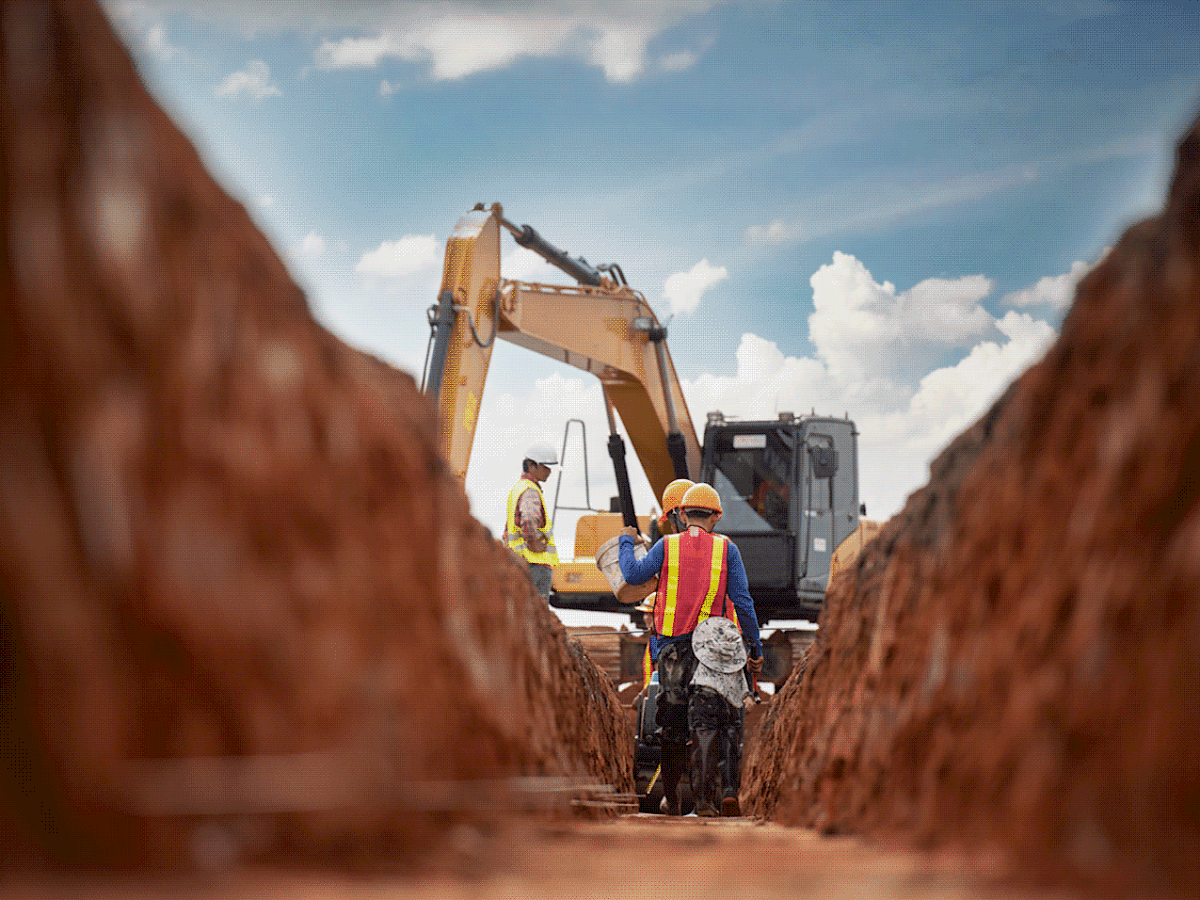
Dolomite provides independent management, technical oversight and QA/QC throughout the implementation of agreed risk mitigation measures. Working on behalf of the client, we oversee specialist contractors undertaking geophysical surveys, intrusive investigations, UXO identification, clearance and disposal operations.
Our role includes verification of survey coverage, positioning, equipment performance, data quality, processing, anomaly interpretation and investigation results. We recognise that geological interference, high target densities, incomplete datasets and unsuitable methodologies can compromise technical confidence, productivity and cost.
Where findings challenge initial assumptions, we review the evidence, assess alternative methods and adapt the mitigation strategy before further resources are committed. Throughout delivery, we monitor contractor performance, programme, expenditure and emerging risks, ensuring the client retains control.
We also independently review completed works against agreed acceptance criteria, evaluate residual risks and provide ALARP assurance where appropriate.

Why Independence Matters
UXO risk management should be driven by the hazard and the client's project requirements, not by the volume of survey or clearance work undertaken. Dolomite operates independently of physical survey and clearance contracting, providing objective advice and technical scrutiny throughout the process.
This independence allows us to challenge methodologies, interrogate data, evaluate contractor recommendations and verify that expenditure remains proportionate to the risk.
Our priority is the right risk-management decision, not more investigation or clearance.
Industry Standards & Governance
Dolomite's approach is informed by CIRIA C681 — Unexploded ordnance (UXO) risk management guide for land-based projects, alongside applicable legislation and recognised industry practice.
Our services support the established progression from preliminary and detailed risk assessment through risk mitigation and implementation, with independent QA/QC and residual-risk assurance integrated throughout.
For UK construction projects, we support clients and relevant duty holders in addressing UXO hazards within the framework of the Construction (Design and Management) Regulations 2015, including the identification, management and communication of foreseeable risks. Our approach emphasises contractor competence, data quality, transparent reporting, emergency response planning and documented risk-management decisions.
Our Services
- Preliminary and Detailed UXO Risk Assessment
- UXO Risk Management Plans
- Independent Geophysical Survey QA/QC
- Survey, Investigation and Clearance Management
- Independent Site Supervision and On-Call Support
- UXO Awareness, Education and Training
- Residual Risk Assessment and ALARP Assurance