Developmenet Site


Explosive Remnants of War | ERW
Uncovering the past. Protecting the future
Explosive Remnants of War (ERW) and legacy military activities can leave hazardous explosive ordnance in the ground long after conflict or military operations have ended. Unexploded munitions, abandoned ammunition, landmines and other explosive hazards can present significant risks to personnel, infrastructure and commercial development.
From mining, energy and infrastructure projects in countries such as Mozambique, Libya and Iran to reconstruction and development activities in Ukraine, historical and contemporary conflict can create complex challenges for land access, ground investigation, construction and ongoing operations. These hazards are not limited to areas of armed conflict. Former military training grounds, firing ranges, weapons testing facilities, ammunition disposal sites and areas used for military mobilisation and preparations for war can also contain explosive ordnance requiring investigation and, where necessary, clearance.
Our Approach
Stage 1 – Characterise & Risk Assess
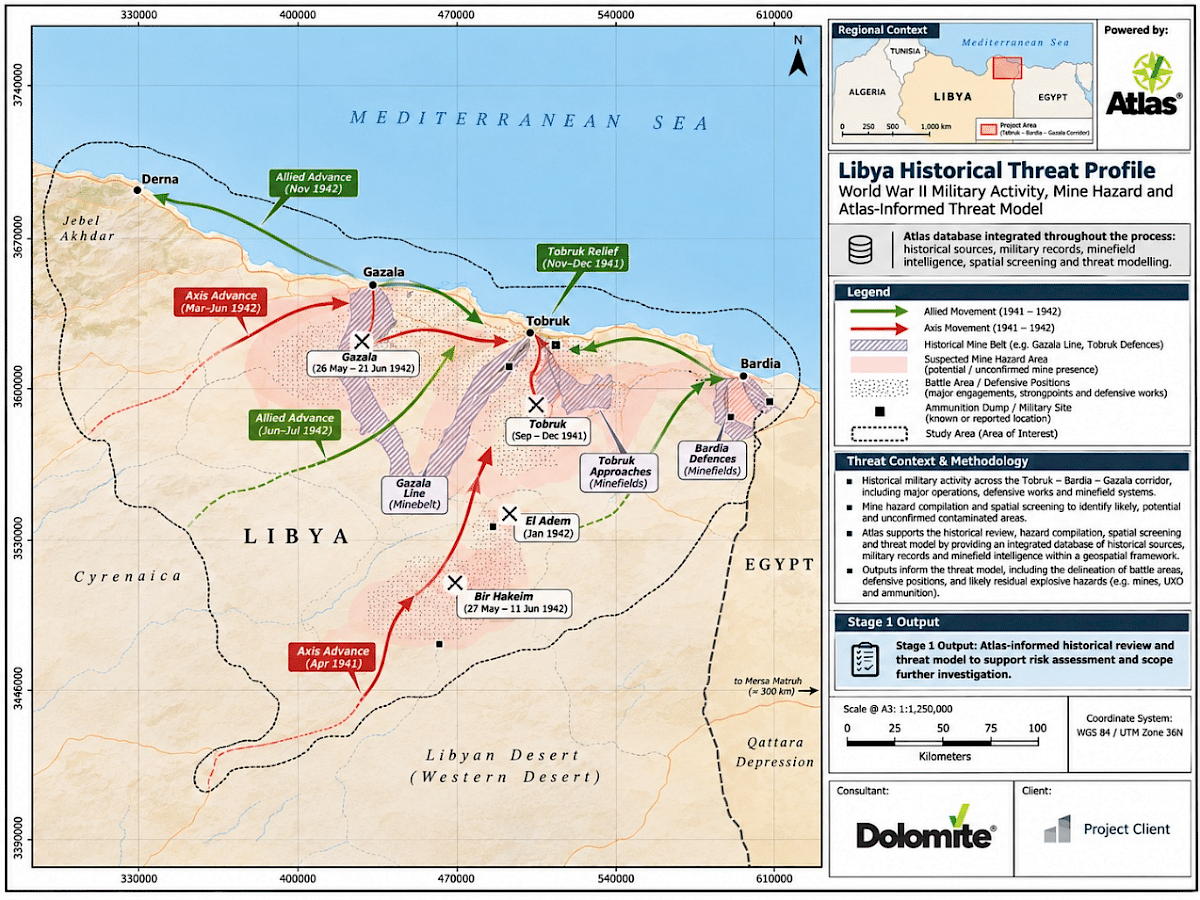
Effective risk management begins with understanding the historical activities that may have introduced explosive ordnance into the ground. Dolomite combines historical research, military records, local intelligence, previous survey and clearance information, and available site data to assess the nature, distribution and potential severity of explosive hazards.
We evaluate how these hazards may interact with proposed activities, including site investigation, drilling, excavation, earthworks, mineral extraction, forestry and construction. Where survey or investigation data are available, we critically review their quality, coverage, interpretation and limitations. This is particularly important in complex environments where geological conditions, high anomaly densities or incomplete historical records can introduce significant uncertainty into the assessment.
Our objective is to distinguish credible explosive hazards from other sources of uncertainty, identify the areas and activities requiring attention, and avoid unnecessary investigation where the evidence does not justify it.The assessment also identifies initial explosive ordnance awareness and education requirements for personnel entering or working within potentially contaminated areas.
Stage 2 – Client Risk Management Plan
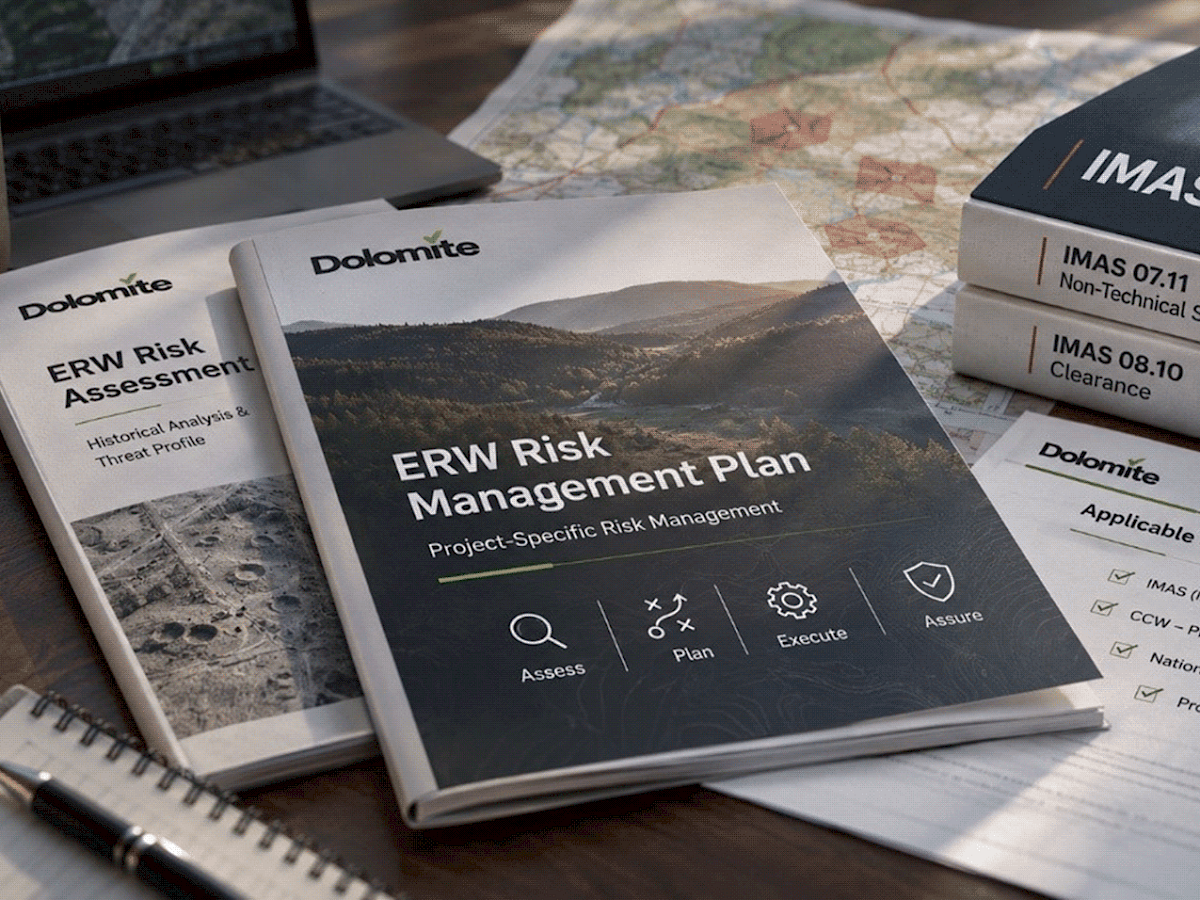
Where explosive hazards are identified, Dolomite develops a project-specific risk management plan aligned with operational requirements, applicable legislation and recognised international standards. Our approach prioritises hazard avoidance and proportionate intervention, considering measures such as non-technical and technical survey, geophysical investigation, targeted clearance, access restrictions, site supervision and emergency response procedures.
For complex or extensive sites, the strategy may involve phased investigation, prioritisation of higher-risk areas, targeted verification of survey results and clearly defined criteria for completing individual work areas. We consider the practical implications of each approach, including site conditions, accessibility, contractor capability, productivity, programme and cost. Where uncertainty remains, controlled trials or further investigation may be used to validate assumptions before committing to larger-scale clearance activities.
Education and training form an integral part of the plan, establishing requirements for workforce awareness, contractor induction, hazard reporting and safe working practices. The objective is to establish a clear and achievable route to risk reduction, with defined responsibilities, decision points and completion criteria, while avoiding unnecessary investigation, clearance, programme disruption and cost.
Stage 3 – Risk Management Execution
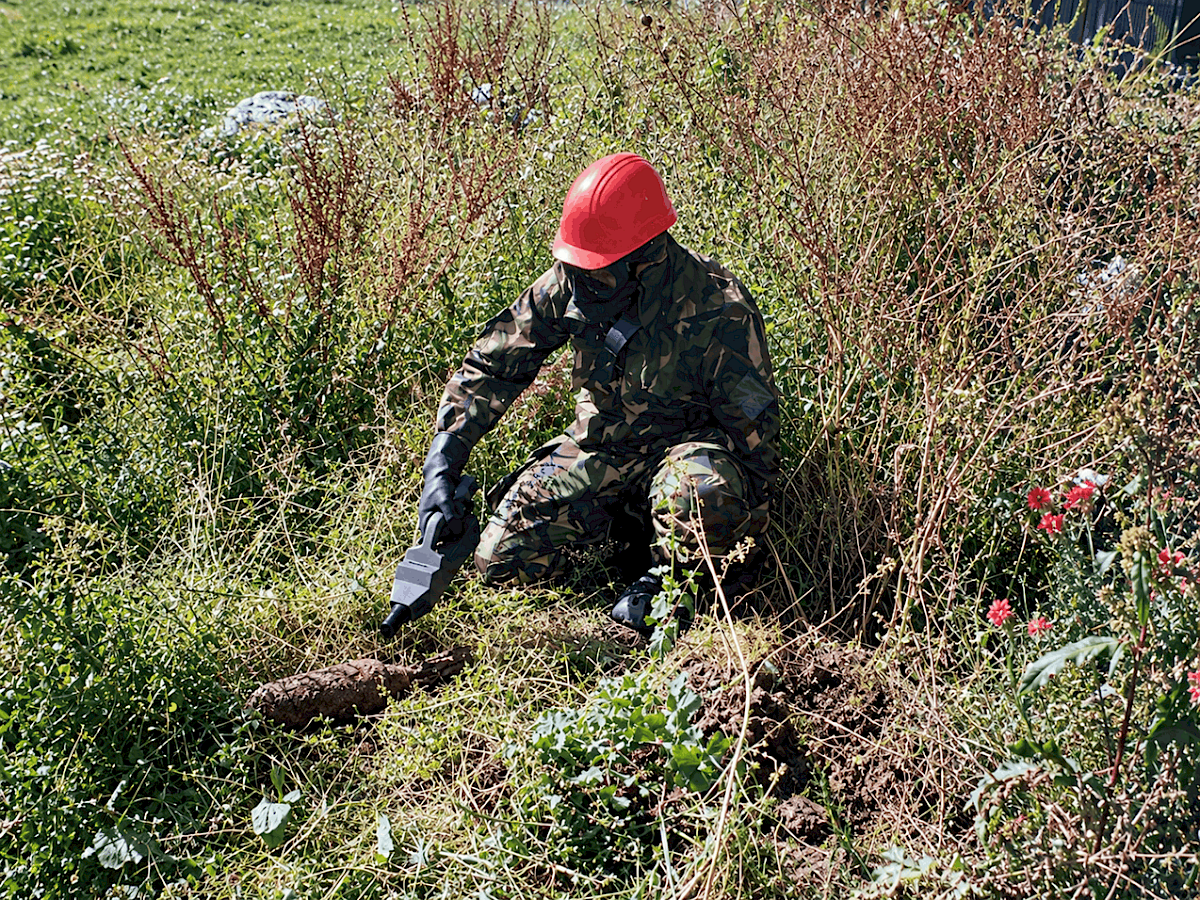
Dolomite provides independent management and technical oversight of the investigation and mitigation measures required to support project delivery. Working with appropriately qualified and authorised specialist contractors, we coordinate and assure geophysical surveys, intrusive investigations, explosive ordnance identification, targeted clearance and disposal operations.
Our involvement extends beyond technical supervision to include contractor coordination, programme monitoring, quality assurance, operational safety and the management of emerging risks. We review survey and investigation findings as work progresses, challenging interpretations where necessary and adapting methodologies when site conditions, target densities or investigation results differ from initial assumptions. This may include reprioritising work areas, refining investigation methods, introducing additional verification measures or adopting a phased approach to completion. Regular reporting, accurate spatial records and clear communication with the client ensure that progress, expenditure, emerging risks and outstanding decisions remain visible throughout delivery.
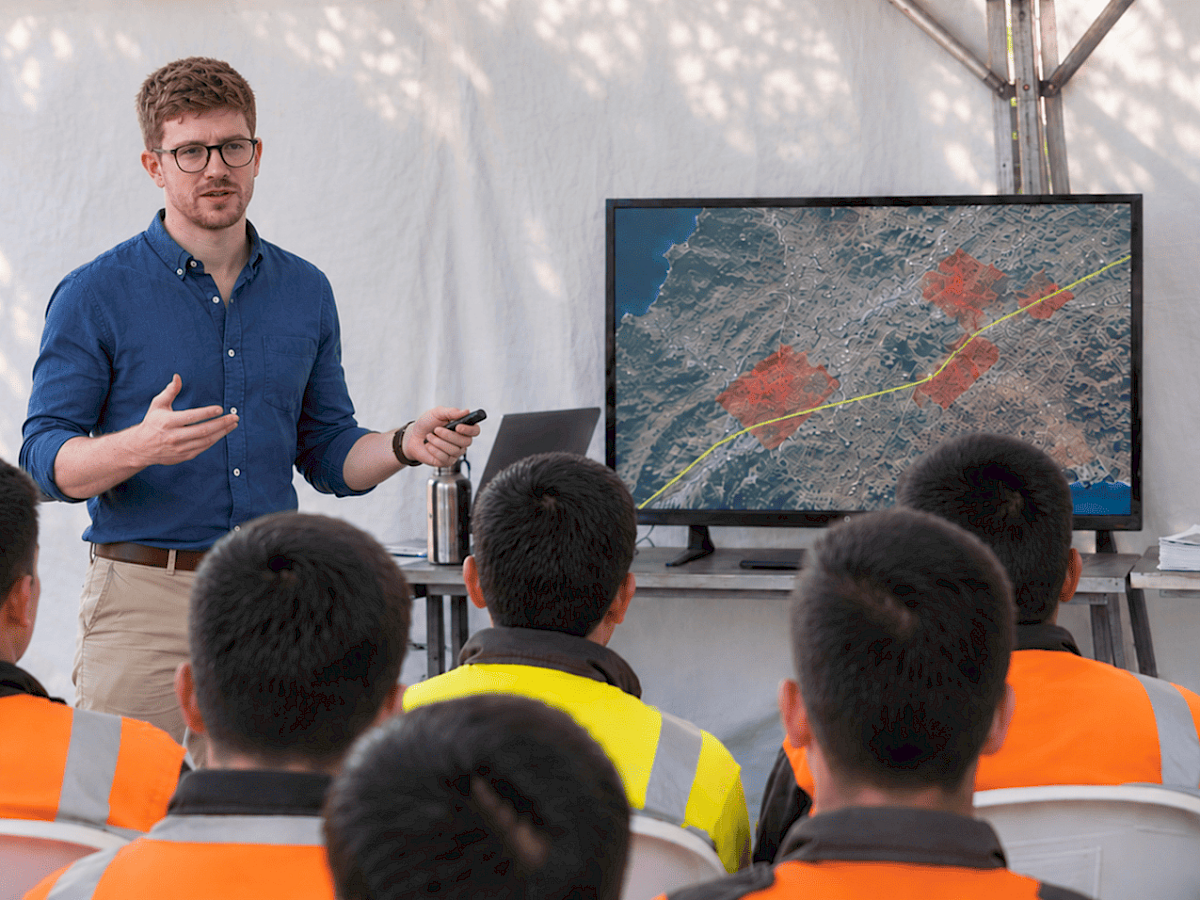
We also deliver or coordinate site-specific explosive ordnance awareness training, operational briefings and workforce education, ensuring personnel understand potential hazards, reporting procedures and the actions required following an unexpected discovery. Our objective is to ensure that investigation and mitigation activities remain safe, effective, proportionate and aligned with the client's wider project requirements.
Stage 4 – Assurance & Support
Effective risk management requires confidence that agreed measures have been implemented and that any remaining explosive ordnance risks are understood. Dolomite independently reviews investigation and clearance evidence, evaluates the effectiveness of mitigation measures and establishes a defensible residual-risk position.
This includes reviewing survey coverage, investigation outcomes, clearance records, outstanding anomalies and the limitations of the available evidence. For larger or more complex projects, we support phased completion and the progressive release of work areas, subject to agreed acceptance criteria and appropriate management of residual risks.
Where applicable, this includes ALARP assessment and independent assurance against agreed project requirements and relevant standards. Our support can continue throughout construction, land management and operational activities, including on-call technical advice, refresher training, updated risk assessments and support following unexpected ordnance discoveries.
The objective is to provide clients with clear evidence of what has been investigated, what measures have been completed, what risks remain and what controls may be required for future activities.
Managing Complexity in Practice
Explosive ordnance risk management is rarely a straightforward process, particularly across extensive landholdings, former military areas and sites with complex terrain or historical contamination. Our experience supporting the investigation and clearance of legacy explosive ordnance on a large Scottish woodland estate demonstrates the importance of combining technical assessment with effective project management.
Challenges can include high numbers of suspected targets, difficult ground conditions, limitations in geophysical data, restricted access and the need to balance investigation and clearance activities with ongoing land management. In these circumstances, simply increasing the scale of investigation or clearance may not provide the most effective solution.
Dolomite works with clients and specialist contractors to critically evaluate the available evidence, test alternative methodologies, prioritise work areas and establish practical, phased routes to completion. This independent, adaptive approach helps maintain control of risk, programme and expenditure while ensuring that decisions remain technically justified and properly documented.
International Standards & Governance
Dolomite's approach is informed by recognised international conventions, technical guidance and applicable national regulatory frameworks. These include the Convention on Certain Conventional Weapons (CCW), Protocol V, relating to explosive remnants of war, and the International Mine Action Standards (IMAS), which provide internationally recognised guidance for risk assessment, land release, survey, clearance, quality management and explosive ordnance risk education.
Our education and training activities are informed by the principles of Explosive Ordnance Risk Education (EORE), supporting hazard awareness, safe behaviour and appropriate responses within potentially contaminated environments. We recognise that regulatory requirements, technical standards and clearance obligations differ between countries. Our approach integrates international good practice with national requirements and project-specific risk considerations.
Our Services
- ERW and Legacy Explosive Ordnance Risk Assessment
- ERW Risk Management Plans
- Survey, Investigation and Clearance Management
- Independent Site Supervision and On-Call Support
- Explosive Ordnance Risk Education and Training
- Residual Risk Assessment and ALARP Assurance